

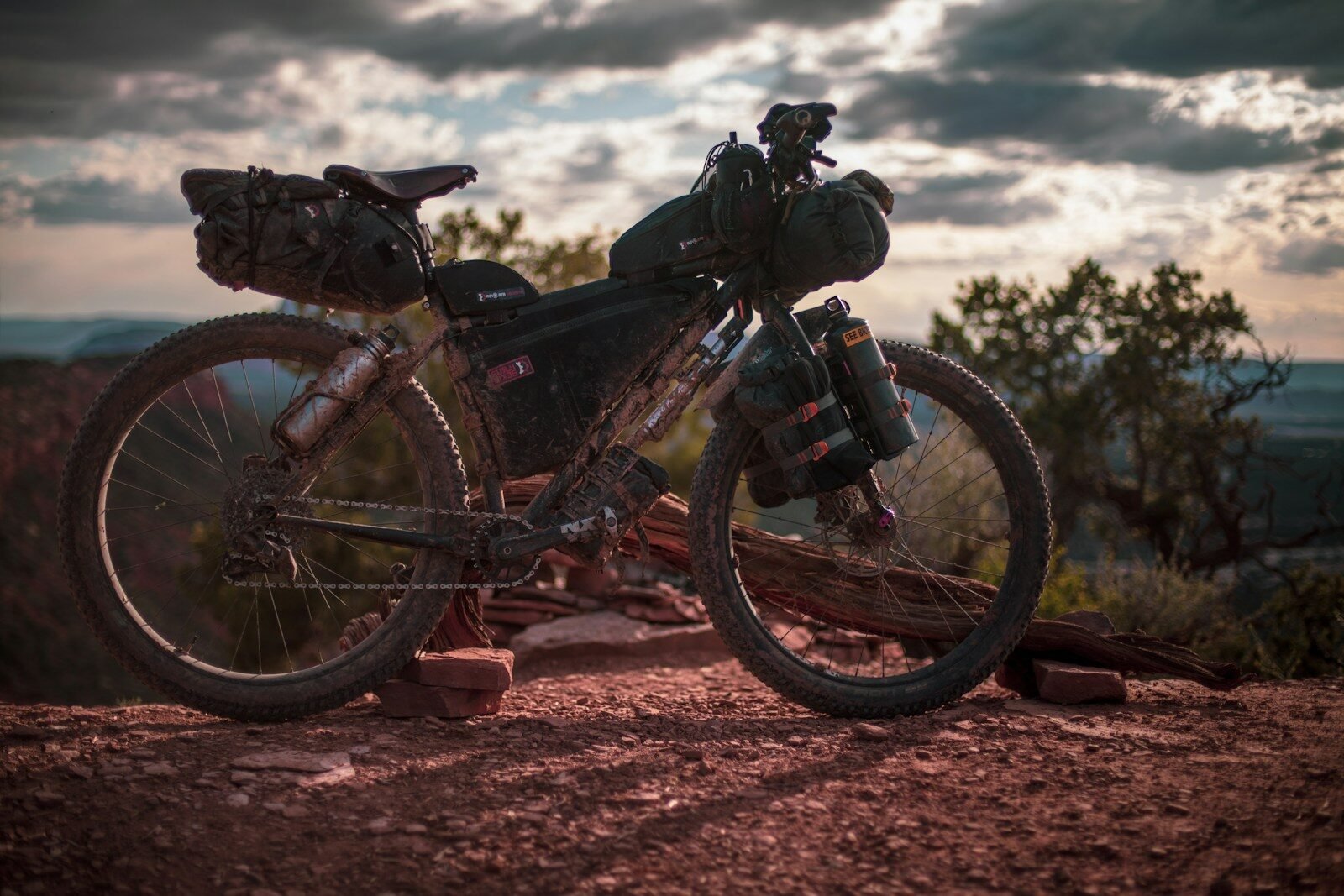
Bikepacking is what happens when cycling meets camping and the road gets a little wilder. You load a few light bags onto your bike, point it toward a trail, track or quiet back road and ride for a couple of days, sleeping wherever the day ends. There are no heavy panniers, no rigid schedule and no need for a support vehicle. Done sensibly, a first trip can be a modest weekend loop close to home. Here is how to plan one that is fun, not a struggle.
What makes bikepacking different
Traditional bicycle touring uses racks and panniers, which suit smooth roads. Bikepacking uses soft bags strapped directly to the frame, handlebars and seat post. They keep the bike narrower and lighter and let it handle gravel tracks, forest paths and rough terrain more easily. The trade-off is limited space, so every item has to earn its place.
Choose a bike that suits your route
You do not need a special bike for a first trip. What matters is that it is reliable, fits you and handles your terrain.
- Gravel bikes are versatile, comfortable and efficient on mixed surfaces.
- Mountain bikes, especially hardtails, handle rough tracks and steep descents with confidence.
- Touring and hybrid bikes work well for roads and easy trails, with the option of racks.
Before your trip, have the bike serviced. Check brakes, tires, chain and gears, and make sure the wheels spin true. A bike that runs smoothly at home may not forgive neglect at the end of a long day.
The bags
A typical setup uses three main bags.
- Handlebar roll: holds your sleeping bag or tent, carried at the front.
- Frame bag: fits inside the main triangle and carries heavy, dense items like tools, food and a stove, keeping weight low and central.
- Saddle pack: holds clothes and lighter items at the rear.
A small top-tube bag or pouch gives easy access to snacks, a phone and a map, and a hydration pack or bottles carry water. Pack heavy things low and close to the center, and keep the load from swaying. Test your setup on a short ride before the trip.
What to pack
Think in systems.
- Sleep: a lightweight tent or bivy, sleeping bag rated for the conditions and an insulated sleeping pad.
- Clothing: padded cycling shorts, a base layer, a warm mid layer, a rain jacket, gloves and a spare dry set for camp. Choose quick-drying fabrics and modest, comfortable cuts.
- Cooking: a small stove, fuel, a pot, a spoon and a lighter, or plan to eat at shops and cafes on the way.
- Water: bottles with capacity for the longest stretch between refills, plus a filter or purification tablets.
- Navigation and communication: phone, offline maps, a power bank, a charging cable and a paper map as backup.
- Safety: helmet, front and rear lights, a first aid kit and a whistle.
- Toiletries and sun protection: small and simple.
Bring a repair kit
Out on the trail, you are your own mechanic. Carry:
- One or two spare inner tubes and a patch kit
- Tire levers and a compact pump
- A multi-tool with hex keys and a chain tool
- A spare chain link
- Zip ties, a little duct tape and spare bolts
- Chain lube and a small rag
Practice fixing a flat and reconnecting a chain at home. These tasks are far easier in the garden than on a roadside in the rain.
Plan a first route
- Keep it short. An overnight or two-day trip of 40 to 70 kilometers per day is a good start, especially with a loaded bike. Distances feel longer with luggage and hills.
- Choose a loop or a route with transport options, so you can bail out if needed.
- Check surfaces. Gravel, sand and mud can slow you considerably.
- Look at elevation. Total climbing matters as much as distance. A hilly 50 kilometers can be harder than a flat 80.
- Plan resupply. Mark shops, cafes and water sources, and note their opening hours. In remote areas, carry extra food and water.
- Know where you will sleep. Book a campsite or hostel, or check local rules about wild camping. Rules differ widely between countries and regions, so always check and ask permission on private land.
Navigation
Use a GPS device or phone app with downloaded offline maps, and carry a paper map or printed route notes as backup. Save your route in more than one place, bring a power bank and keep your phone in a waterproof pouch. Tell someone your route and expected arrival.
Riding loaded
- Take it easy. A loaded bike is heavier and slower to turn or brake. Leave more stopping distance, and ride smoothly.
- Use low gears on climbs and spin comfortably.
- Eat and drink often. Small snacks every hour keep energy steady, and sip water regularly.
- Be visible, with lights and bright clothing, especially at dawn, dusk and on roads shared with traffic.
- Respect others. Greet walkers, slow down near animals and keep to legal tracks. Some trails are closed to bikes.
- Rest. Stop for breaks, stretch, and listen to your body.
Camp and leave no trace
Choose a flat, durable site away from water, set up before dark and keep your bike secure. Cook and store food away from your sleeping area, and pack out everything you bring. Leave the spot as if no one had been there.
Weather and safety
Check the forecast for each day, and bring layers for temperature swings. Heat, cold, rain and wind all affect cycling, and a sudden change can be dangerous in exposed areas. Do not hesitate to shorten the day, shelter or turn back. Carry a charged phone, know local emergency numbers and be honest about your limits.
Frequently asked questions
Do I need an expensive bike?
No. A reliable, well-maintained bike you are comfortable on is enough for a first trip.
How fit do I need to be?
Enough to ride several hours a day comfortably. Build up with regular rides, including some with a loaded bike.
Is wild camping allowed everywhere?
No. Rules vary a lot. Check local regulations, use designated sites where required and ask landowners for permission.
Can I go alone?
Many people do, but a first trip is easier and safer with a friend.
Start small and roll on
Bikepacking is simple at heart: a bike, a few bags and a route. Start with a short loop, pack light, learn from each trip and let the miles teach you the rest. The best part is that adventure may be just beyond your town’s last streetlight.