

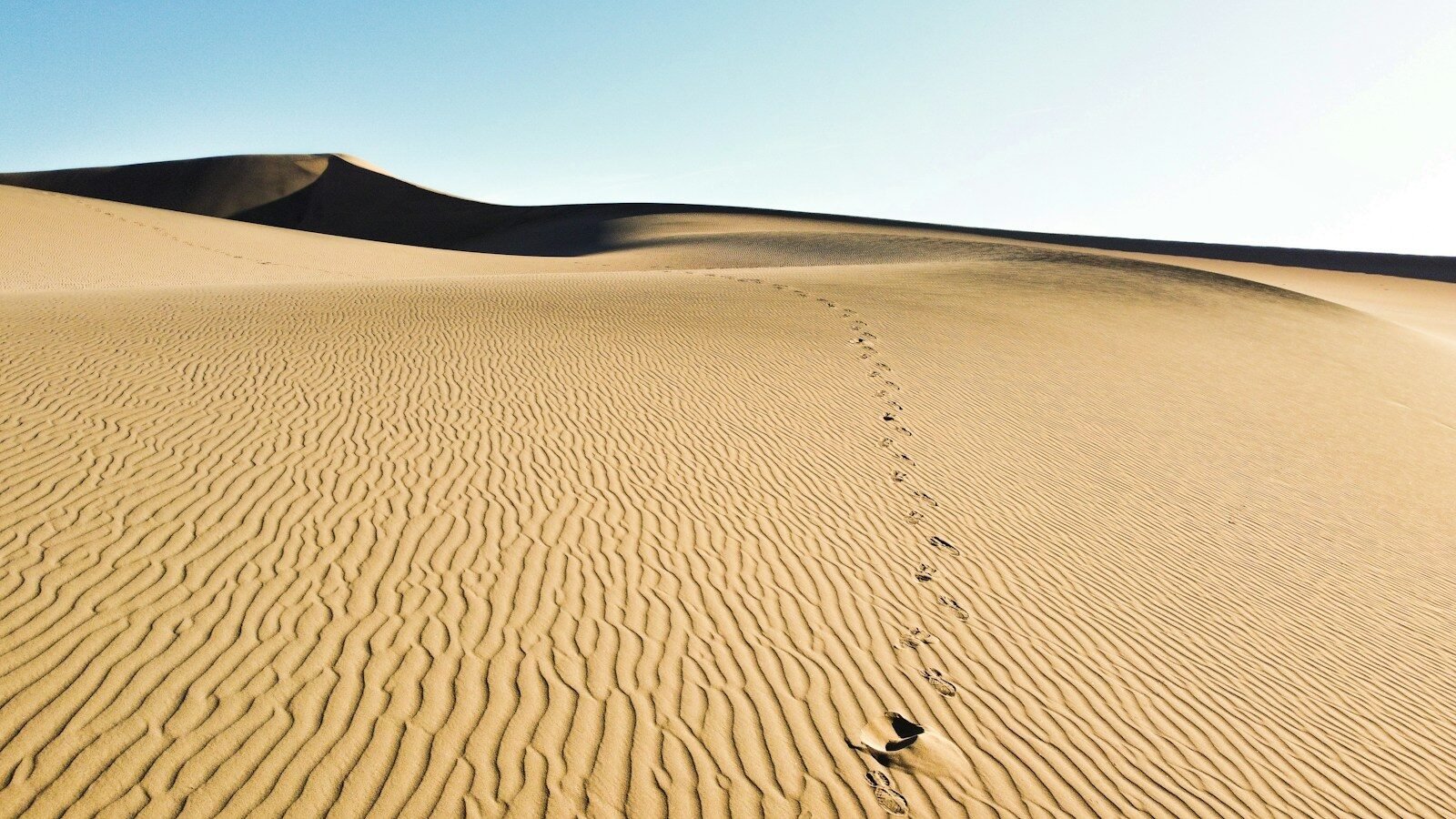
The desert looks simple from a distance: sand, sky, silence. Up close it is one of the most demanding places to travel, where the main threats are not dramatic but quiet. Heat, dehydration and wrong turns cause far more trouble than any wild animal. The good news is that desert trekking is very safe for people who plan well, and the rewards are real: enormous skies, cold clear nights and a sense of space that few places offer. Here is how to prepare.
Water: the number that decides everything
Your body loses water through sweat much faster in dry heat, and because sweat evaporates instantly, you may not notice how much you are losing. Do not wait for thirst.
- Carry more than you think you need. In hot desert conditions, many guides plan for around four to eight liters per person per day, depending on temperature, effort and body size. Treat this as a starting point and ask local experts for advice on your route.
- Sip steadily through the day instead of drinking large amounts at once.
- Replace salts too. Heavy sweating removes electrolytes. Oral rehydration salts or salty snacks help, and drinking only plain water in large volumes can dilute body salts.
- Know your water sources. Wells and springs can be dry or unsafe. Never count on a source you have not confirmed recently, and treat any natural water before drinking.
- Watch your urine. Pale yellow is good. Dark yellow or very little means you need more fluid.
Plan around the heat, not against it
Experienced desert travelers shift their day to match the sun.
- Start at first light and cover most of the distance in the cool morning.
- Rest in shade through the hottest hours, roughly late morning to late afternoon, using a tarp, tent or natural shade.
- Walk again in the evening or camp early.
- Keep daily distances realistic. Sand slows you down far more than firm ground, and a short distance on a map can take twice as long on dunes.
Choose the season carefully. Many popular deserts are comfortable in cooler months and dangerously hot in summer.
What to wear
Counterintuitively, covering up keeps you cooler.
- Loose, light-colored, long-sleeved clothing shields skin from sun and slows sweat loss.
- A wide-brimmed hat or a traditional head wrap protects the head and neck. A scarf can also cover the face during wind and dust.
- Sunglasses with good UV protection prevent glare and eye strain.
- Sturdy, breathable shoes with closed toes, plus light gaiters to keep sand out.
- Sunscreen on exposed skin, and lip balm.
- A warm layer for the evening, since desert nights can be surprisingly cold.
Recognizing heat illness
Heat problems build gradually, and they get worse quickly if ignored.
- Heat exhaustion: heavy sweating, weakness, headache, nausea, dizziness, cool and clammy skin. Move to shade, rest, sip fluids with salts and cool the body with wet cloths.
- Heatstroke: a medical emergency with confusion, hot and flushed skin, a very high body temperature, fainting or seizures. Cool the person immediately by every means available and get urgent medical help.
Treat headaches, dizziness and cramps as signals to stop and cool down, not as things to push through. Travel with a first aid kit and know how to use it. This article is general information and not medical advice.
Navigation and safety
Desert terrain can look identical in every direction, and tracks vanish under wind-blown sand.
- Go with a local guide if you are new to the area. Guides know water points, weather patterns and safe routes, and in many regions guided trips are the sensible and respectful option.
- Carry a map, a compass and a charged GPS or phone, and know how to use them. A power bank and a satellite messenger add safety.
- Tell someone your route and return time, and agree on what they should do if you are late.
- If you are lost, stop. Stay put in shade, conserve water and make yourself visible. Moving blindly burns water and energy.
- Do not rely on mobile signal. Coverage is often nonexistent.
Wind, sand and sudden weather
Sandstorms can arrive with little warning. If one approaches, cover your nose and mouth, protect your eyes, turn your back to the wind and shelter behind a vehicle, rock or your pack. Do not try to walk through a severe storm. Dry riverbeds, called wadis in some regions, can also flood suddenly after distant rain, so avoid camping in them.
Camping in the desert
- Pitch camp on firm, flat ground away from dry riverbeds and loose cliffs.
- Shake out shoes and bedding before use, as insects and small animals shelter from the heat.
- Use a stove and follow local fire rules, since firewood is scarce and fragile ecosystems recover slowly.
- Stars are spectacular, so give yourself time to enjoy them.
Leave no trace
Desert soils and plants grow slowly and are easily damaged. Stay on existing tracks where possible, carry out all waste, bury human waste well away from water and camps where rules allow, and respect the customs and property of local communities and nomadic families you may meet. Ask before photographing people.
Frequently asked questions
How much water should I carry?
It depends on heat, distance and your body, but plan generously and consult guides who know the route. Never set out with only the minimum.
Is it safe to trek alone?
It is much riskier than in a group. Beginners should go with a guide or experienced companions.
What if my water runs low?
Stop, find shade and signal for help. Reduce activity, ration sensibly and avoid walking in the heat of the day.
Do I need special gear?
Mostly practical basics: large water capacity, sun protection, navigation tools, a first aid kit and good footwear.
Respect the empty places
Deserts reward humility. Plan around water and heat, travel with people who know the land and leave the place as you found it. Do that, and the silence and the stars will feel less like a challenge and more like a gift.