

A zellige panel is built upside down. The craftsman lays hundreds of tiny glazed pieces face down on a flat table, in a pattern he cannot see, and only discovers the finished design when the whole panel is flipped over. It is a strange way to make something beautiful, and it explains almost everything about how the craft looks and feels.
What zellige actually is
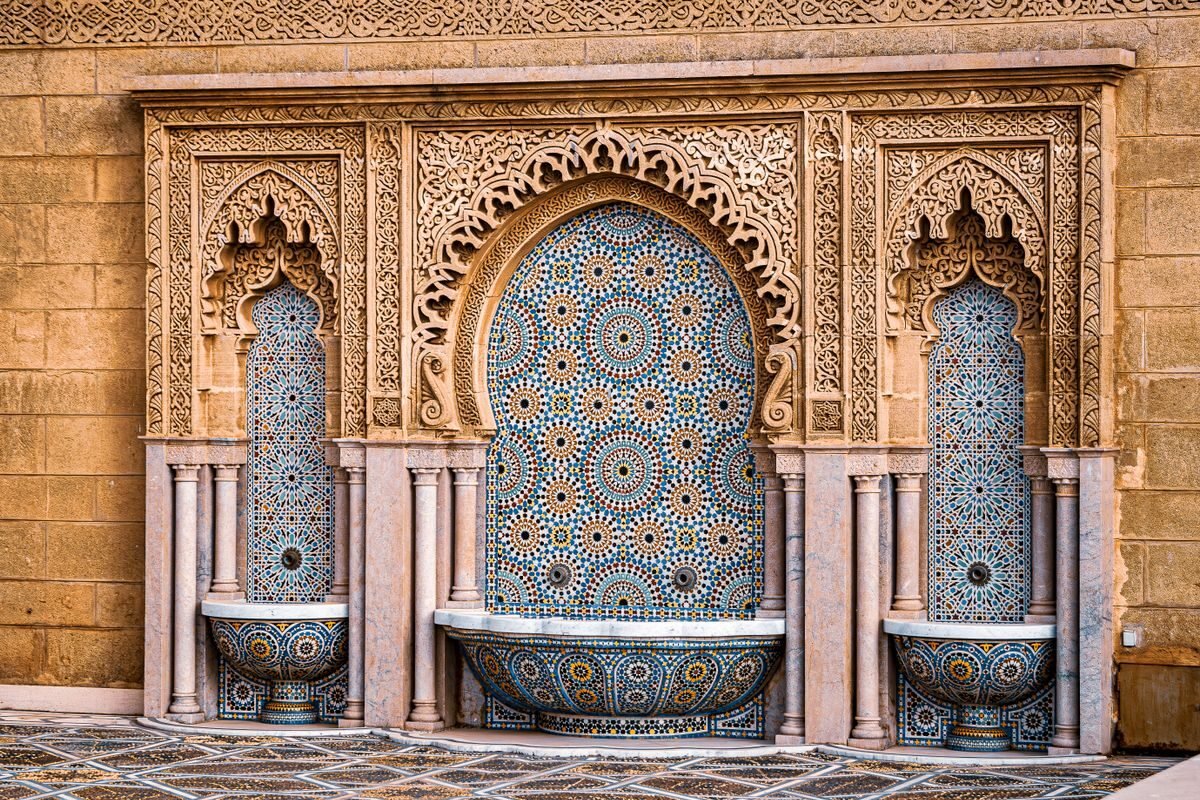
Zellige is a form of mosaic made from small, hand-cut pieces of glazed clay that fit together like a jigsaw. Each piece has its own shape (stars, kites, hexagons, long slivers, tiny diamonds), and each one is cut to match its neighbors. Fez is the city most closely tied to the craft, though workshops exist in other Moroccan cities too, and the technique decorates palace walls, courtyard fountains, floors, table tops and the walls of ordinary homes.
The word is often used loosely for any square glazed Moroccan tile. The difference matters. A plain square zellige tile is the raw material. The mosaic, with its interlocking geometric pieces, is what happens when a skilled cutter turns those squares into something far more intricate.
It starts with clay and two trips through the fire
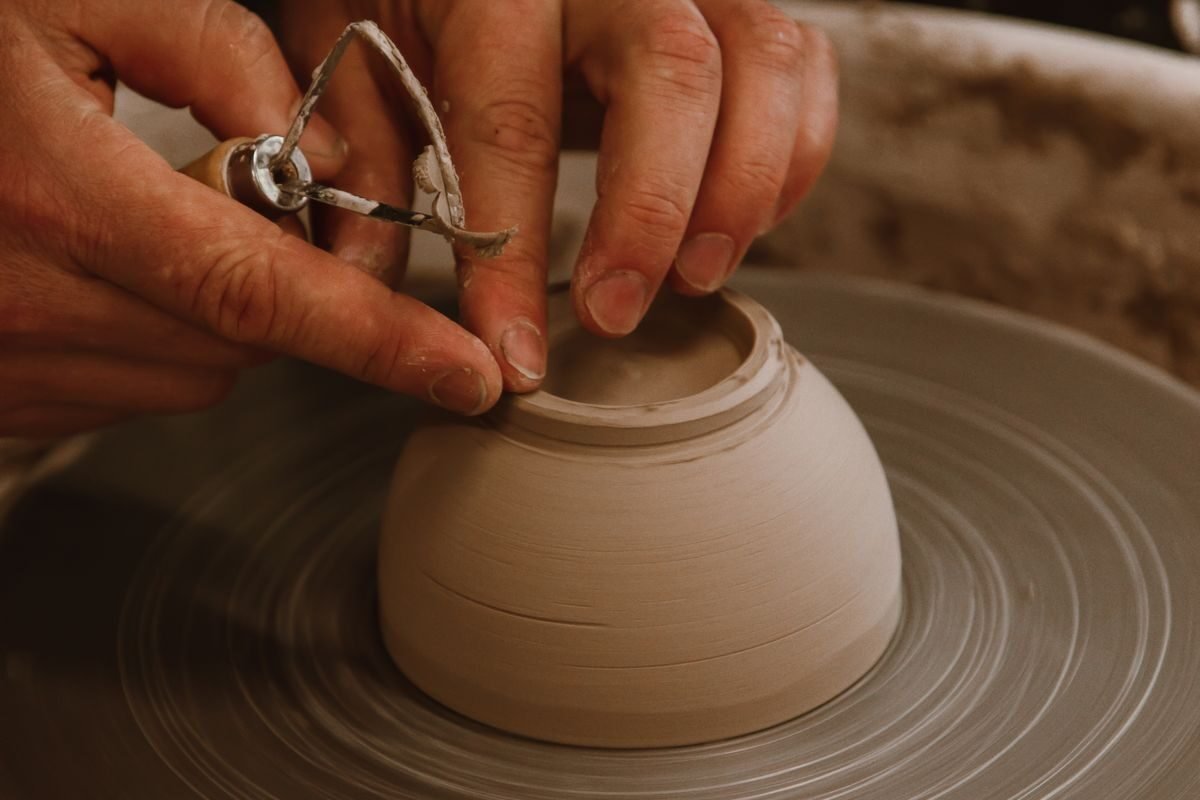
The base of every zellige tile is a clay body that is pressed or shaped into a square, then left to dry. Workshops traditionally dried these squares in the open air, which is one reason the craft has always been tied to the dry seasons. Once dry, the squares go into a kiln for a first firing. This turns soft clay into hard ceramic and is called the biscuit firing.
Next comes the glaze. A liquid glass-forming coating is applied to one face of each tile, and the tiles are fired a second time so the glaze melts into a smooth, glossy skin. Historically kilns were fed with wood, while many workshops today use gas, but the principle has not changed: clay, fire, glaze, fire again.
Because the glaze sits on the surface only, the back of the tile stays raw and rough. That detail turns out to be important later, when the tile is cut and set into mortar.
The cutting: where the real skill lives
This is the stage that gives zellige its reputation. A cutter works from a traced or templated shape and chips each tile down using a small hammer with a sharp edge. The first pass is rough, removing the bulk of the unwanted tile. The second pass refines the edge until it is crisp and fits the neighboring piece with almost no gap.
There are no power tools in the traditional method. The cutter reads the tile as it breaks, feels where the clay wants to split, and adjusts the angle of each strike. A single mistake can ruin a piece that took a day to glaze and fire, so cutters work with a calm, repetitive rhythm. Apprentices often spend years on simple shapes before they are trusted with the delicate ones.
Think about the numbers for a moment. A large geometric panel can contain thousands of individual pieces, and every one of them was shaped by hand. That is why authentic zellige costs so much more than machine-made tile, and why the work rarely looks mass-produced.
Assembling the pattern face down
Once the pieces are cut, a second craftsperson places them glazed side down on a flat surface, following the design in mirror image. The pieces are packed tightly, edge to edge, so the pattern holds its shape. Then a layer of mortar or plaster is poured over the raw backs, often reinforced, so the whole panel becomes one solid slab.
When the mortar cures, the slab is lifted, flipped, and the design appears for the first time. If a piece was cut wrong, the error is already locked in. This working method demands accuracy from every person in the chain, and it is the reason the craft is usually done in teams, with the master craftsman checking the pattern at each step.
Why the geometry works so well
Zellige patterns look complicated, but most are built from a simple idea: take a repeating grid, divide it into polygons, and fill each polygon with a color. A star with eight points is surrounded by smaller shapes that echo its angles, and the whole arrangement can extend in every direction without a visible seam.
This is symmetry doing the heavy lifting. When a pattern repeats by rotation, reflection and translation, the eye reads it as calm and ordered even when it contains dozens of colors. Designers can also swap color schemes without changing the underlying shapes, which is why two panels can feel entirely different while sharing the same skeleton.
- Colors are usually few and strong: deep blue, green, white, yellow, brown and black are common.
- Small pieces carry detail; larger pieces give the eye places to rest.
- Borders and bands frame the main field, much as a mat frames a painting.
Why no two tiles ever match perfectly
Hold a piece of genuine zellige in good light and you will notice the surface shifts from one tile to the next. Glaze pools in some corners and thins on edges. Fine cracks (called crazing) may run across the surface. Colors vary a little between batches. Edges are slightly irregular.
None of this is a defect. These traits come from hand shaping, uneven kiln heat and the way glaze behaves on a small clay body. They are also the easiest way to tell the real thing from a printed imitation, which is perfectly flat, perfectly even and often a little lifeless. If a tile looks too flawless, it probably was not made by hand.
Living with zellige at home
Zellige is durable, but it prefers gentle treatment. Use a soft cloth and mild soap rather than harsh acids or abrasive powders, which can dull the glaze. Because the tiles are slightly uneven, installers usually use thin grout lines and a setting bed that allows for small height differences. If you plan a floor or a wet area, ask the supplier whether the specific tile is rated for it, since quality and thickness vary between workshops.
Prices, availability and recommended installation methods change, so check current information with a reputable supplier before you buy.
Frequently asked questions
Is zellige the same as a mosaic?
Zellige is a type of mosaic. The word refers to the specific Moroccan technique in which glazed clay tiles are cut into geometric pieces and assembled face down, rather than to any small tile pressed into cement.
How long does it take to make a zellige panel?
It depends on size and complexity, but the process involves making tiles, firing them twice, cutting every piece and assembling the pattern. Even a modest panel is the work of several days, and large ones take much longer.
Why are the tiles cracked or uneven?
Hand shaping, uneven kiln temperatures and the way glaze settles all leave small variations. Fine crazing and slight differences in color are normal for handmade zellige.
Can zellige be used outdoors?
Many traditional installations are in courtyards and on fountains, which shows the material can handle the elements. Frost, however, can damage ceramic that absorbs water, so confirm the tile specification for your climate.
How can I tell handmade zellige from a copy?
Look at the edges and surface. Handmade pieces show slight irregularities, pooled glaze and subtle color shifts. A copy tends to be uniform and printed, with no depth in the color.
The craft in one idea
Zellige proves that precision and imperfection can live in the same object. The pattern is exact enough to run across a whole wall, yet every piece carries the mark of the hand that cut it. If you ever get the chance to watch a cutter at work, stay for ten minutes. Few crafts make the connection between patience and beauty so easy to see.