


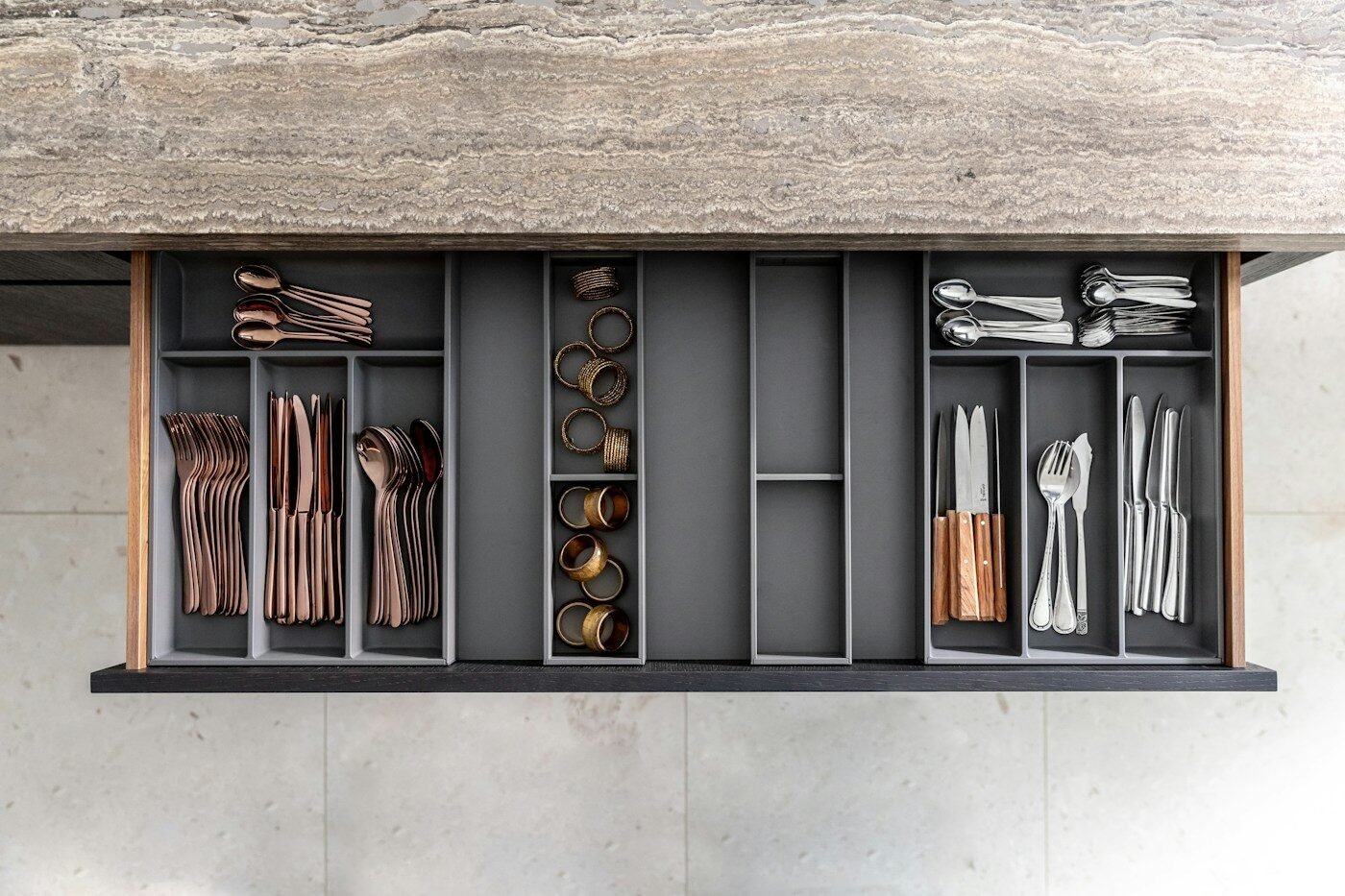
Think about the last time you cooked a meal and felt irritated. Maybe you crossed the kitchen three times for the same pan, hunted for a spoon in the wrong drawer or put a hot dish down where there was no space. A frustrating kitchen is rarely a matter of size. It is usually a matter of arrangement. When the things you use together are stored together, near where you use them, cooking becomes quicker, calmer and safer. The method is called zoning, and you can apply it in a tiny galley kitchen as well as a large family one.
The idea behind zones
A zone is an area of the kitchen dedicated to one task, with everything you need for that task within arm’s reach. Instead of organizing by item type, such as all the plates here and all the pots there, you organize by activity. The guiding rule is simple: store things where you first use them.
Professional kitchens work this way, with stations for prep, cooking and cleaning. Home cooks can borrow the logic without a commercial budget.
The five core zones
1. Prep zone
This is where you wash, chop and mix, ideally the largest stretch of clear counter, near the sink and the refrigerator. Keep here or close by:
- Cutting boards, in a drawer, a slot or a vertical holder
- Knives, in a block, on a magnetic strip or in a drawer organizer, placed safely away from children
- Mixing bowls, graters, peelers and measuring tools
- Colanders, in a nearby cupboard
- A bin or a compost container for scraps
2. Cooking zone
Centered around the stove or oven. Everything needed to cook should be within a step or two.
- Pots, pans and lids, in the cupboard or drawer closest to the stove
- Cooking utensils such as spoons, spatulas and ladles, in a crock or drawer beside the hob
- Oils, salt, pepper and frequently used spices, within reach but not directly above the heat, which can spoil them
- Oven gloves and trivets, hung or stored nearby
3. Cleaning zone
Around the sink and the dishwasher, if you have one.
- Dish soap, sponges, brushes and cloths, kept under or beside the sink
- A drying rack or mat
- Everyday dishes, glasses and cutlery stored close to the dishwasher or drying area, so putting away takes seconds
- Cleaning products stored out of reach of young children and separate from food
4. Food storage zone
Your refrigerator, freezer and pantry or cupboards for dry goods.
- Group foods by use: baking supplies together, breakfast items together, grains and pasta together, canned goods together, snacks together.
- Put the foods you use most at eye level, and heavy or rarely used items on low or high shelves.
- Use clear containers and labels so you can see what you have, which also reduces waste.
- Rotate older items to the front.
5. Serving and tableware zone
Plates, bowls, glasses, cutlery and serving dishes, ideally near the dining area, the dishwasher or the prep zone, depending on the layout. If space is limited, store everyday items within easy reach, and special occasion items higher up or in a less accessible place.
Think in terms of frequency
Within each zone, use a simple hierarchy.
- Daily items: in the easiest spots, between hip and shoulder height.
- Weekly items: in lower or slightly higher cabinets.
- Occasional items, such as the big stockpot or festive serving dishes: in the highest, lowest or furthest storage.
If you use something once a year, it does not deserve prime real estate.
The classic work triangle
Kitchen designers often talk about the work triangle, the imaginary line between the sink, the stove and the refrigerator. The idea is that these three points should be close enough to move between easily, but not so close that you collide with someone else. You may not be able to change a fixed layout, but understanding it helps you place zones sensibly, such as putting the prep area between the sink and the stove.
Tips for small kitchens
- Go vertical. Wall rails, hooks, magnetic strips and shelves above counters free up cupboards.
- Use drawer dividers. Keeping utensils separated prevents the daily dig.
- Choose multi-purpose items. Nested bowls, collapsible colanders and stackable containers save space.
- Clear the counters. Leave out only the things you use every day, such as a kettle or a cutting board.
- Use the insides of doors, where slim racks can hold lids, wraps or cleaning supplies.
- Limit duplicates. Keep one good set of the tools you truly use.
How to reorganize in a weekend
- Empty one area at a time, starting with a drawer or a cupboard.
- Declutter. Remove broken, unused or duplicate items.
- Clean the empty space, since it is a rare chance to wipe the inside of cupboards.
- Observe your habits. Notice where you naturally reach for things while cooking.
- Assign zones, and put items into their homes, beginning with the daily ones.
- Test for a week. Adjust anything that feels awkward. Good arrangements usually need a couple of tweaks.
Safety in the zones
- Store knives securely, out of children’s reach.
- Keep heavy pots low, so you do not lift them overhead.
- Do not store flammable items, such as paper towels and cloths, near the stove.
- Keep cleaning chemicals away from food, and keep them in their original labeled containers.
- Leave a clear surface next to the stove for placing hot pans.
Keeping it working
A well-zoned kitchen can slide back into chaos if you let it. A few habits help.
- Put things back where they belong right after use or washing.
- Do a quick five-minute reset in the evening.
- Review the pantry and fridge weekly, and plan meals around what you have.
- Reassess every few months, since needs and habits change.
Frequently asked questions
Do I need new cabinets or storage products?
Usually not. Rearranging what you have solves most problems. Add inexpensive dividers or containers only where necessary.
What if my kitchen is very small?
Zoning matters even more. Use vertical space, keep only essentials and combine zones where needed.
How do I deal with shared kitchens?
Agree on zones together, label shelves and keep communal items accessible. Clear rules reduce friction.
Should spices go near the stove?
Within reach, yes, but not directly above it, since heat and steam reduce their flavor and shelf life.
A kitchen that works with you
Zoning is not about a perfect magazine kitchen. It is about reducing wasted steps and decisions so that cooking feels easier and more enjoyable. Begin with one zone this week, probably the cooking area, and notice the difference. Soon, the pan will be exactly where your hand expects it.