

Most people try to declutter one room at a time. They start in the bedroom, get tired, and the pile of “maybe” items migrates to the hallway. Weeks later, the house looks the same, only messier. In a small home, where every shelf matters and there is nowhere to hide extra stuff, a different approach works far better: declutter by category. Instead of asking “What is in this room?”, you ask “How much of this kind of thing do I own?” The answer is often surprising, and it makes decisions much easier.
Why category beats room
Similar items are scattered around the house. You may have scissors in the kitchen, the study, the bedroom and a drawer you forgot. Sorting by room means you never see the total, so you keep “just one more.” Gathering everything of one type in one place shows exactly what you have, reveals duplicates and helps you choose the best and let go of the rest. This approach was popularized by organizing author Marie Kondo, though the idea itself is simple and works whatever system you prefer.
Before you begin
- Decide why. More space, less stress, easier cleaning or a calmer mind? Write one sentence and keep it visible.
- Set up four boxes or zones: keep, donate or give away, sell, and recycle or discard. Add a “not sure” box with a date.
- Start easy. Begin with categories that carry little emotion so you build momentum.
- Choose a time. Block a few hours, and aim to finish a category in one session, because stopping halfway leaves a bigger mess.
A sensible order
Going from easy to hard makes the process less painful.
- Clothes. Gather every garment, including coats, shoes and accessories, on the bed or floor.
- Books and media.
- Paper. Bills, letters, manuals, school papers.
- Miscellaneous household items. Kitchen, bathroom, tools, cables, cosmetics, stationery, spare parts.
- Sentimental items. Photographs, gifts, keepsakes, children’s art.
Step by step with one category
1. Gather everything
Collect every item of the category from every corner of the home and pile it in one place. This is the moment of truth, and it can feel overwhelming. That is normal, and it is also the motivation.
2. Handle each item
Pick it up, since touching an object makes the decision more honest than glancing at a pile. Ask a few direct questions:
- Have I used or worn this in the last year?
- Does it work, fit and suit my life now?
- Do I have another that does the same job?
- If I were shopping today, would I buy it?
- Does it make my life easier or my home nicer?
3. Sort into zones
Be decisive. Keep what you use and value, and let the rest move on. A common mistake is to keep things out of guilt, such as gifts you dislike or expensive items you never use. A wasted purchase stays wasted whether it sits in a cupboard or leaves your home. At least outside, it can be useful to someone.
4. Choose a home for what stays
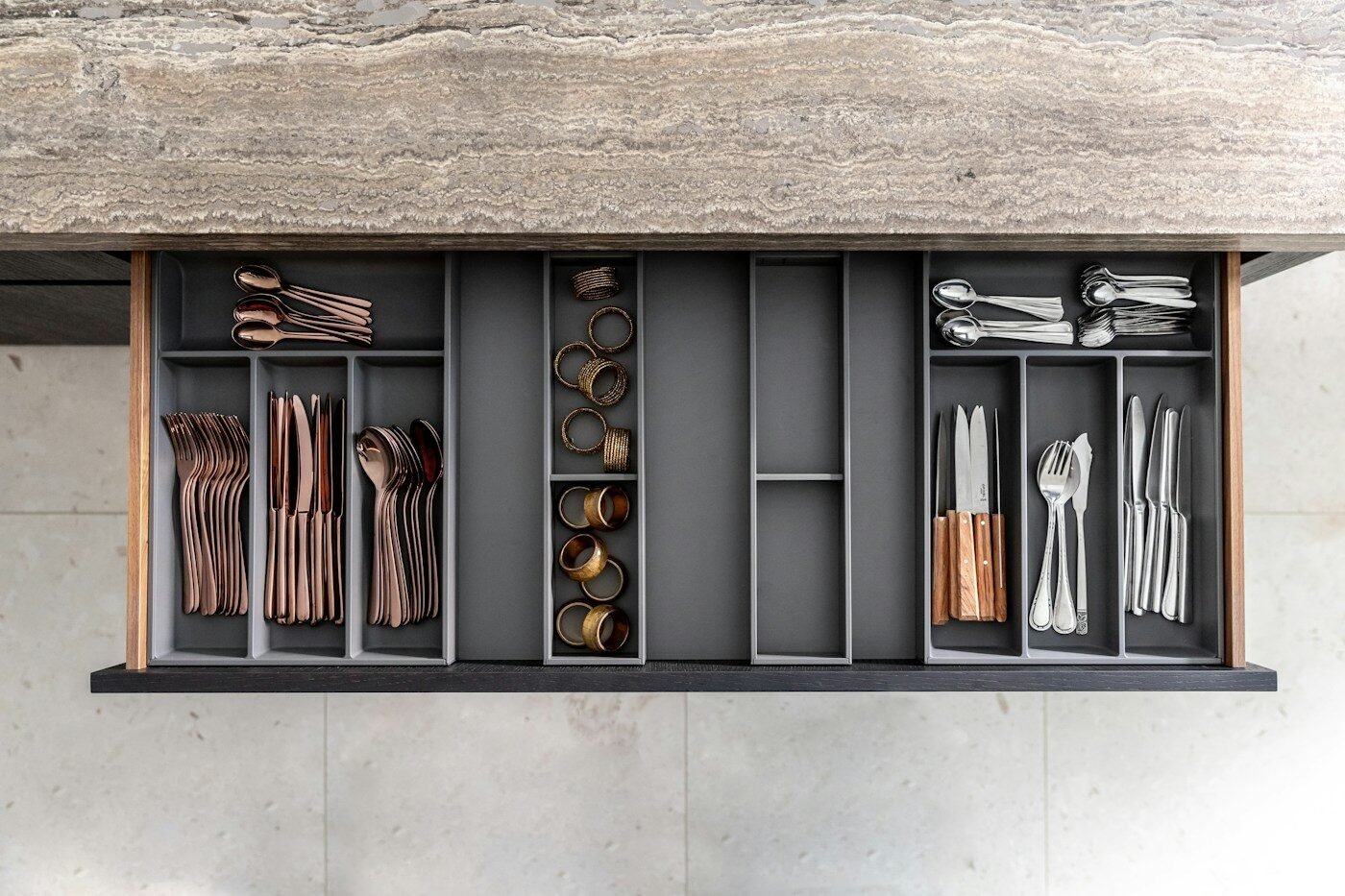
Each kept item needs a specific place, ideally where you use it. Store similar things together, and use vertical space, hooks, boxes and drawer dividers to make the most of a small area.
Tricks for small homes
- Use the one-in, one-out rule. When something new arrives, something old leaves.
- Look up and under. Shelves above doors, space under beds and the backs of doors hold a lot.
- Choose multi-purpose items. A storage ottoman or a table with drawers earns its space.
- Keep surfaces clear. Clear counters and tables make a small room look larger.
- Limit duplicates. One good set of kitchen tools beats three half-used ones.
- Digitize paper. Scan documents, photograph children’s art and keep only what is legally or emotionally needed.
Handling sentimental items
Sentimental objects are the hardest. A few ideas help:
- Give yourself a limit, such as one box or one shelf per person.
- Keep the best representative piece instead of the whole collection.
- Photograph items before letting them go, and keep the photos in a folder or album.
- Remember that memories live in you, not in the object.
- Do not decide about items that belong to someone else without asking them.
If a particular object brings strong grief or a loss is recent, there is no rush. Put it aside and return later.
Where things go next
- Donate clean, usable items to charities or community groups that accept them, or give them to neighbors and friends.
- Sell valuable items online or at second-hand markets, but set a deadline so they do not linger.
- Recycle paper, glass, metal and electronics through proper collection points.
- Discard broken or unsafe items responsibly.
Do it promptly. Bags left by the door for weeks tend to creep back into the house.
Common mistakes
- Buying storage before decluttering. Reduce first, then organize what remains.
- Starting with sentimental items and giving up.
- Declutter shaming other family members. Focus on your own things.
- Expecting a perfect result in a weekend.
- Letting new clutter in at the same pace as the old goes out.
Frequently asked questions
How long does decluttering take?
It depends on the size of the home. A single category, such as clothes, often takes a few hours, and a full home may take weeks of short sessions.
What if I regret throwing something away?
It happens occasionally, but most people find they rarely miss what they let go. Use the “not sure” box to reduce the risk.
How do I deal with family members who keep everything?
Lead by example, keep shared spaces agreed upon and respect personal areas. Pressure usually backfires.
How do I keep it from coming back?
Give every item a home, review regularly and pause before buying to ask whether you need it.
Space to breathe
Decluttering by category turns a vague chore into a clear, finite project. Gather everything, handle each item, keep what serves you and give a place to what stays. Start with one drawer or one category this week, and see how much lighter the room feels.